
North Carolina caps security deposits at specific maximum amounts based on tenancy type: shorter tenancies have lower limits, and leases longer than month-to-month have a higher maximum deposit.


Dated: September 20 2026
Views: 0

North Carolina caps security deposits at specific maximum amounts based on tenancy type: shorter tenancies have lower limits, and leases longer than month-to-month have a higher maximum deposit limit. Landlords can use that money only for unpaid rent, damage beyond normal wear and tear, and a short list of other statutory reasons. Once you move out, your landlord has 30 days to refund your deposit or send an itemized accounting, with a possible extension to 60 days in specific circumstances.
TL;DR:
- Landlords in North Carolina can only charge security deposits up to two weeks’ rent for week-to-week tenancies, one and a half months for month-to-month leases, and two months for longer fixed-term agreements.
- Security deposits must be held in a licensed trust account, with tenants entitled to written notice of the bank or insurance company within 30 days of lease start, and landlords must transfer or refund the deposit within 30 days of move-out.
- Tenants should document move-in and move-out conditions with timestamped photos or videos, and maintain a written move-in checklist to protect against unwarranted deductions.
- Deductible deposit expenses exclude normal wear and tear such as carpet aging, minor scuffs, or faded paint, and landlords cannot charge for routine cleaning or appliance depreciation.
- Failing to provide a timely, itemized refund or accounting can lead to full deposit forfeiture for landlords, and tenants can recover damages through small claims or legal action if necessary.
The Tenant Security Deposit Act sets firm ceilings tied to how you pay rent, not to the size of the unit or the landlord's preference. A week-to-week renter cannot be charged more than two weeks' rent. Month-to-month tenants top out at one and a half months' rent. Anyone signing a lease longer than month-to-month, like a standard 12-month agreement, can be asked for up to two months' rent as the caps break down by tenancy type.
Those limits matter because a landlord asking for three months' rent on a standard year-long lease is simply out of bounds under state law.
Once collected, the deposit is not a landlord's slush fund. Under G.S. 42-51, landlords may use it only for:
Pet fees work differently. A landlord can charge a reasonable, nonrefundable pet fee on top of the security deposit, but that fee cannot be lumped into the deposit accounting later. Pet-related damage, though, can still be deducted from the actual security deposit itself.
Your money cannot just sit in your landlord's checking account unmonitored. State law requires it to go into a trust account at a licensed, insured bank or savings institution, or be covered by a bond from a licensed insurance company.
Here's what you're entitled to know, and by when:
If the rental property changes hands during your tenancy, the outgoing landlord has to either transfer your deposit to the new owner and notify you within 30 days, or refund it to you directly. Either way, you should get something in writing confirming which path was taken.
Once you hand back the keys, the clock starts. Your landlord has 30 days from the date you deliver possession to either refund your full deposit or send you an itemized statement explaining every deduction. If the full cost of damage or unpaid charges genuinely can't be determined within that window, the law allows an interim accounting followed by a final accounting no later than 60 days after move-out.
That 60-day extension is not a blank check. It only applies when the landlord truly cannot calculate the full amount owed within 30 days, such as waiting on a repair estimate. A landlord who simply ignores the deadline because they haven't gotten around to it is not covered by that exception.
Pro Tip: Give your landlord your new address in writing the same day you move out, by email or certified mail. Without a forwarding address, the accounting clock can effectively be paused, and you lose your strongest argument if the deposit doesn't show up on time.
When a landlord blows past these deadlines or keeps money without a valid statutory reason, you have real leverage:
That forfeiture penalty is worth remembering. It means a landlord who simply stays quiet past the deadline, hoping you'll forget about it, is taking on real legal risk rather than a minor administrative slip.
North Carolina Real Estate Commission guidance is consistent on one point: photo and video documentation at move-in and move-out is the single most effective tool tenants have against unjustified deductions. A folder of timestamped images beats a memory of "it was already like that" every time.
Follow this sequence to protect yourself from day one through move-out:
Practitioners who handle these cases regularly point to a specific evidence pattern that holds up best in small claims court: timestamped photos, a signed move-in form, and retained repair or cleaning receipts, presented together rather than piecemeal. If your dispute involves a landlord who won't respond at all, the NC Real Estate Commission can field complaints about licensed property managers, while the state Department of Justice handles broader consumer complaints. For anything involving real money at stake, a private attorney consult is worth the hour, especially since a winning tenant can often recover those fees.
Some deductions show up so often in North Carolina disputes that they're worth naming directly. Ordinary carpet wear from years of foot traffic gets billed as "carpet replacement," even though normal wear and tear is explicitly excluded from what a deposit can cover. Nail holes from hanging pictures, faded paint from sunlight, and minor scuffs on walls fall into the same excluded category, no matter how a landlord labels them on the itemized statement.
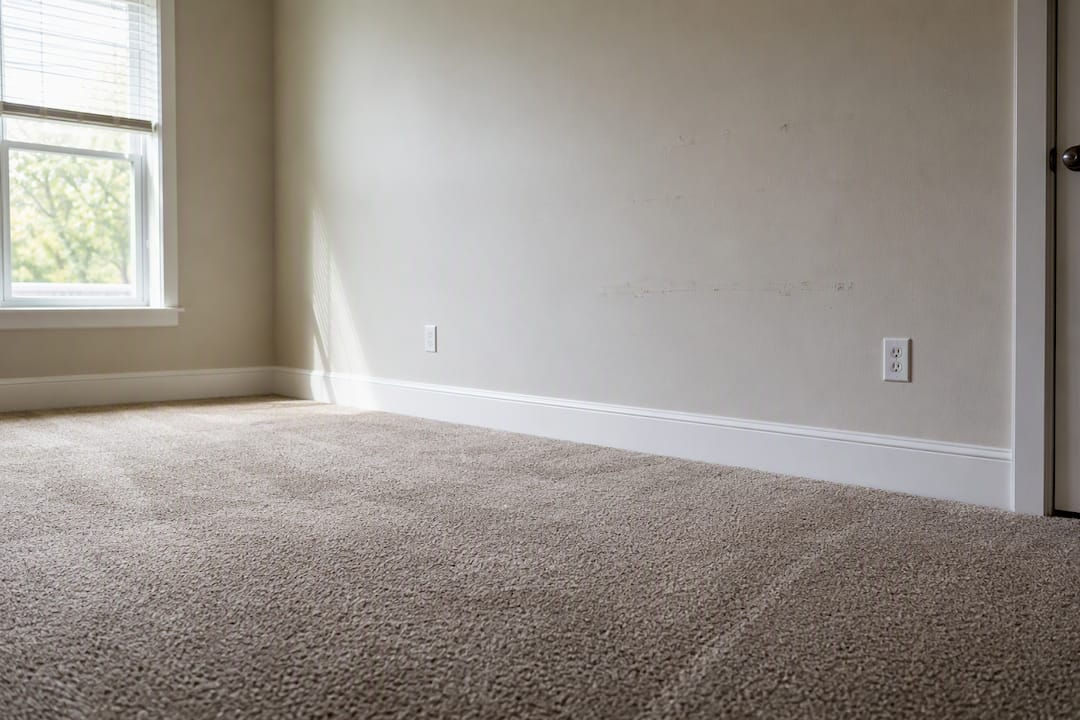
Routine cleaning is another frequent overreach. A landlord can charge for genuinely excessive filth left behind, but a standard cleaning fee applied to every departing tenant regardless of the unit's actual condition doesn't hold up if challenged. The same goes for charging full replacement cost on appliances or fixtures that were already old when you moved in. Depreciation matters, and a ten-year-old stove doesn't get billed at new-stove prices.
Watch for deductions tied to lease violations that were never actually documented during the tenancy, like an unauthorized pet charge when no pet policy violation was ever raised while you lived there. Late fees or unrelated administrative charges tacked onto the final accounting also fall outside the permitted uses under G.S. 42-51. If your itemized statement includes a vague line like "damages" with no explanation or receipt, you're entitled to ask for specifics, and a landlord who can't produce them has a weak position if the matter goes to court.
Most deposit disputes get resolved faster through a documented conversation than through a courtroom. Before drafting a demand letter, send your landlord a calm, factual email laying out exactly what you're disputing, referencing your move-in photos or the itemized statement's specific line items.
Keep the tone businesslike, not accusatory. Landlords who manage multiple units sometimes make honest mistakes in accounting, and a clear, evidence-backed message often resolves the issue without further conflict. Ask for a specific response deadline, typically five to seven business days, and note that you're prepared to escalate if you don't hear back.
If the landlord responds with a partial explanation, ask direct follow-up questions rather than accepting a vague answer. Request receipts for any repair or cleaning charges. If they cite "damage," ask which room, what damage, and how the cost was calculated. This written record becomes your evidence file if you eventually need it for a demand letter or small claims filing. Only after a reasonable, documented attempt at resolution falls flat should you move toward the formal remedies covered earlier, since courts and mediators generally look favorably on tenants who tried to resolve things directly first.

The two mistakes I see most often in Central North Carolina rentals are painfully avoidable: no move-in photos, and no forwarding address left with the landlord. Both cost tenants money they were legally owed.
Working with an agent-managed rental, one with a formal tenant onboarding process, written receipts, and clear escrow handling, closes most of these gaps before they become disputes. It's not about distrust of landlords; it's about paperwork doing the job memory can't. Renters who treat their lease signing with the same care as a purchase contract tend to walk away with their full deposit far more often than those who don't.
— Chelsea
A lease you sign without a documented walkthrough is a deposit dispute waiting to happen. Mebaneliving's Tenant Onboarding Appointment gives you a written move-in checklist, guidance on lease paperwork, and a documented record from the start, so you're never relying on memory if a landlord disputes your deposit later.

If you're weighing whether your current rent and deposit are even in line with the local market, our Free Rent Analysis gives you a clear read on Central North Carolina rental pricing at no cost. And if you're browsing your next move, you can view current homes for rent or check out homes for sale in Mebane if buying is on your radar instead of renting again. Schedule your tenant onboarding appointment before you sign your next lease, and start the tenancy with documentation on your side instead of scrambling for it at move-out.
Every rule covered here traces back to two primary sources worth bookmarking. The full statutory text lives in Article 6 of Chapter 42, the Tenant Security Deposit Act itself. For a plain-language breakdown aimed at both landlords and tenants, the NC Real Estate Commission's tenant brochure walks through accounting timelines and documentation practices in accessible terms.
This article is general information, not a substitute for advice from a qualified lawyer. Consult a qualified legal professional about your own circumstances before acting on anything here.
The cap depends on your lease term: two weeks' rent for week-to-week tenancies, one and a half months' rent for month-to-month leases, and two months' rent for longer fixed-term leases, under the Tenant Security Deposit Act.
Landlords must refund the deposit or send an itemized accounting within 30 days of move-out. If the full cost can't be determined that quickly, an interim accounting followed by a final accounting within 60 days is allowed.
Only for cleaning beyond normal wear and tear left behind at move-out, not routine cleaning applied to every departing tenant regardless of actual condition. Ordinary dust, minor scuffs, and standard wear don't qualify as deductible damage under G.S. 42-51.
Willful failure to provide the accounting can cause the landlord to forfeit their entire right to retain any part of the deposit, and you can file a civil action to recover it along with possible attorney's fees.
Yes. Providing a forwarding address in writing at move-out is critical since it starts and protects the accounting timeline, and it removes any excuse a landlord might have for delayed communication.
Yes. A Tenant Onboarding Appointment walks you through move-in documentation and lease paperwork so you have a written record from day one, which is the single strongest protection against unjustified deductions later.

Hi there! I’m Chelsea Vanderpool, a Property Manager and licensed real estate referral agent as well as team player with Sam Paynter for buying and selling with Weichert REALTORS®, Mark Thom....
North Carolina caps security deposits at specific maximum amounts based on tenancy type: shorter tenancies have lower limits, and leases longer than month-to-month have a higher maximum deposit.
A standard residential boundary survey in North Carolina typically runs $500 to $1,800, while ALTA, topographic, mountain-lot, and large-acreage surveys often climb into the thousands. Pull
Cap rate equals net operating income divided by property value, expressed as a percentage. It measures the unlevered annual yield a property produces, ignoring financing, which makes it a fast way
A triple net (NNN) lease requires the tenant to pay base rent plus property taxes, building insurance, and maintenance costs (CAM). Landlords like the arrangement because it delivers predictable net
 Copyright 2026 Triangle MLS, Inc. of North Carolina. All rights reserved.
The data relating to real estate for sale on this web site comes in part from the Triangle MLS, Inc. of North Carolina. Real estate listings held by brokerage firms other than Weichert, Realtors® - Mark Thomas Properties - Durham are marked with the Broker Reciprocity logo and detailed information about them includes the name of the listing brokers. Brokers make an effort to deliver accurate information, but buyers should independently verify any information on which they will rely in a transaction. The listing broker shall not be responsible for any typographical errors, misinformation, or misprints, and they shall be held totally harmless from any damages arising from reliance upon this data. This data is provided exclusively for consumer's personal, noncommercial use.
Closed (sold) listings may have been listed and/or sold by a real estate firm other than the firm(s) featured on this website. Closed data is not available until the sale of the property is recorded in the MLS. Home sale data is not an appraisal, CMA, competitive or comparative market analysis, or home valuation of any property.
Listings marked with an icon are provided courtesy of the Triangle MLS, Inc. of North Carolina, Internet Data Exchange Database.
This site is monitored for scraping. Any use of listing data obtained from this web site, other than by a consumer looking to purchase real estate, is prohibited.
This data has been updated as of September 21, 2026 2:42 PM UTC
Copyright 2026 Triangle MLS, Inc. of North Carolina. All rights reserved.
The data relating to real estate for sale on this web site comes in part from the Triangle MLS, Inc. of North Carolina. Real estate listings held by brokerage firms other than Weichert, Realtors® - Mark Thomas Properties - Durham are marked with the Broker Reciprocity logo and detailed information about them includes the name of the listing brokers. Brokers make an effort to deliver accurate information, but buyers should independently verify any information on which they will rely in a transaction. The listing broker shall not be responsible for any typographical errors, misinformation, or misprints, and they shall be held totally harmless from any damages arising from reliance upon this data. This data is provided exclusively for consumer's personal, noncommercial use.
Closed (sold) listings may have been listed and/or sold by a real estate firm other than the firm(s) featured on this website. Closed data is not available until the sale of the property is recorded in the MLS. Home sale data is not an appraisal, CMA, competitive or comparative market analysis, or home valuation of any property.
Listings marked with an icon are provided courtesy of the Triangle MLS, Inc. of North Carolina, Internet Data Exchange Database.
This site is monitored for scraping. Any use of listing data obtained from this web site, other than by a consumer looking to purchase real estate, is prohibited.
This data has been updated as of September 21, 2026 2:42 PM UTC
